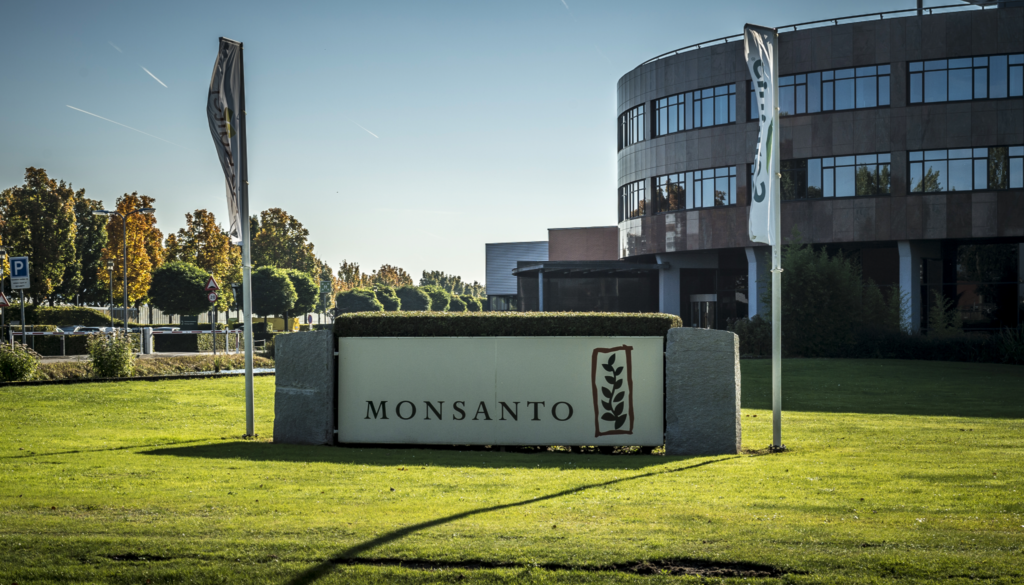
Thanks to The New Lede for this story and to the hundreds of others who ran it. The story is even in Le Monde in Paris.
Citing “serious ethical concerns,” journal retracts key Monsanto Roundup safety study
The journal Regulatory Toxicology and Pharmacology has formally retracted a sweeping scientific paper published in the year 2000 that became a key defense for Monsanto’s claim that Roundup herbicide and its active ingredient glyphosate don’t cause cancer.
Journal Editor-in-Chief Prof. Martin van den Berg, Ph.D., said in a note accompanying the retraction that he had taken the step because of “serious ethical concerns regarding the independence and accountability of the authors of this article and the academic integrity of the carcinogenicity studies presented.”
The paper, titled “Safety Evaluation and Risk Assessment of the Herbicide Roundup and Its Active Ingredient, Glyphosate, for Humans,” concluded that Monsanto’s glyphosate-based weed killers posed no health risks to humans – no cancer risks, no reproductive risks, no adverse effects on development of endocrine systems in people or animals. Regulators around the world have cited the paper as evidence of the safety of glyphosate herbicides, including the Environmental Protection Agency (EPA) in this assessment.
The listed authors of the paper were three scientists who did not work for Monsanto – Gary Williams, Robert Kroes and Ian Munro – and the paper was touted by the company as a defense against conflicting scientific evidence linking Roundup to cancer. The fact that it was authored by scientists from outside the company, from seemingly independent researchers, gave it added validity.
But over the last decade, internal company documents that came to light in litigation brought by cancer victims have revealed that the paper actually was a product of three years of what one company official referred to as “hard work” by several Monsanto scientists who helped craft the paper as part of a strategy Monsanto called “Freedom to Operate” (FTO).
The corporate files show that company officials celebrated their work when the paper was published. In one such email following the April 2000 publication of the Williams paper, Monsanto government affairs official Lisa Drake described the toll the work developing “independent” research papers took on multiple Monsanto’s scientists.
“The publication by independent experts of the most exhaustive and detailed scientific assessment ever written on glyphosate … was due to the perseverance, hard work and dedication of the following group of folks,” Drake wrote. She then listed seven Monsanto employees. The group was applauded for “their hard work over three years of data collection, writing, review and relationship building with the papers’ authors.”
Drake further emphasized why the Williams paper was so significant for Monsanto’s business plans: “This human health publication on Roundup herbicide and its companion publication on ecotox and environmental fate will be undoubtedly be regarded as “the” reference on Roundup and glyphosate safety,” she wrote in the email dated May 25, 2000. “Our plan is now to utilize it both in the defense of Roundup and Roundup Ready crops worldwide and in our ability to competitively differentiate ourselves from generics.”
In a separate email, a company executive asked if Roundup logo polo shirts could be given to eight people who worked on the research papers as a “token of appreciation for a job well done.”
Monsanto’s Hugh Grant, who at that time was a senior executive on his way toward being named CEO and chairman, added his own praise, writing in an email “This is very good work, well done to the team, please keep me in the loop as you build the PR info to go with it.”
In 2015, Monsanto scientist William Heydens suggested that he and colleagues “ghost-write” another scientific paper. Monsanto could pay outside scientists to “edit & sign their names” to the work that he and others would do, Heydens wrote in an email. “Recall that is how we handled Williams Kroes and Munro 2000.”
The emails were spotlighted in jury trials in which cancer victims won billions of dollars in damages from Monsanto, which was bought by Bayer AG in 2018.
In explaining the decision to retract, van den Berg wrote:
“Concerns were raised regarding the authorship of this paper, validity of the research findings in the context of misrepresentation of the contributions by the authors and the study sponsor and potential conflicts of interest of the authors.” He noted that the paper’s conclusions regarding the carcinogenicity of glyphosate were solely based on unpublished studies from Monsanto, ignoring other outside, published research.
Van den Berg did not respond to a request for comment.
When asked about the retraction, Bayer said in a statement that Monsanto’s involvement was adequately noted in the acknowledgements section of the paper in question, including a statement that referred to “key personnel at Monsanto who provided scientific support.” The company said the vast majority of thousands of published studies on glyphosate had no Monsanto involvement.
“The consensus among regulatory bodies worldwide that have conducted their own independent assessments based on the weight of evidence is that glyphosate can be used safely as directed and is not carcinogenic,” the company said.
An EPA spokesman said that the agency is aware of the retraction but “has never relied on this specific article in developing any of its regulatory conclusions on glyphosate.” The spokesman said the EPA has “extensively studied glyphosate, reviewing more than 6,000 studies across all disciplines, including human and environmental health, in developing its regulatory conclusions.” The updated human health risk assessment the agency is currently conducting for glyphosate is “using gold standard science,” the spokesman said. That assessment should be released for public comment in 2026 and will not be relying on the retracted article.
Brent Wisner, one of the lead lawyers in the Roundup litigation and a key player in getting the internal documents revealed to the public, said the retraction was “a long time coming.”
Wisner said the Williams, Kroes and Munro study was the “quintessential example of how companies like Monsanto could fundamentally undermine the peer-review process through ghostwriting, cherry-picking unpublished studies, and biased interpretations.”
“Faced with undisputed evidence concerning how this study was manufactured and then used, for over two decades, to protect glyphosate sales, the Editor-in-Chief … did the right thing,” Wisner said. “While the damage done to the scientific discourse—and the people who were harmed by glyphosate—cannot be undone, it helps rejuvenate some confidence in the otherwise broken peer-review process that corporations have taken advantage of for decades. This garbage ghostwritten study finally got the fate it deserved. Hopefully, journals will now be more vigilant in protecting the impartiality of science on which so many people depend.”
----
MY NOTE: 2017 coverage of the New York Medical College defending Gary Williams (the only one of the three scientists who signed the paper) is unsettling and deserves a followup.

No comments:
Post a Comment