Thursday, January 31, 2019

At the Press Conference: Unified's State of the Industry Panel Sees "Continued Growth" of the $1.4 Billion Organic Sector

L to R: Mike Veseth, Danny Brager, Melissa Lange, Jeff Bitter, and Glenn Proctor 
While organic vineyard acreage is expected to surge by nearly 6,000 acres in this year, it barely got a nod from speakers on the podium at the industry's annual State of the Industry panel session, a popular gathering that is part of Unified Wine Grape Symposium in Sacramento this week, attended by an estimated 14,000 participants.

On the podium, Glenn Proctor of The Ciatti Company mentioned organic bulk wine sales were up in Italy and in Spain, but there was no mention of organics in the U.S., which the picture is dramatically different, experts said at the press conference after the public event.

The organic sector's revenues (2 percent of U.S. off premise sales) are growing at 10 percent annually, according to Nielsen figures (from June 2017 to 2018). Two percent of California's vineyards are certified organic, and if the wine industry overall is valued at $70 billion (according to bw166 estimated from tax receipts data), the organic sector's net worth - at 2 percent of $70 billion - would be $1.4 billion annually (including both domestic and imported wines).

At the press conference after the session, speakers briefly touched on their perceptions of this market.

"We will continue to see growth in that segment," said Danny Brager, SVP of Alcohol Beverages for Nielsen, which collects the bulk of available wine industry scan data on sales revenue and volume. "I don't have the exact numbers, but it's certainly growing."

Looking to softer data culled from social media sources, Brager said, "at the messaging level, I think there's a receptive audience. In social media conversations, younger people - or people when they're talking about health stuff - the other topic that comes up is about the environment and sustainability. Organic pops up pretty heavily in terms of those conversations, which are largely younger people."

Mike Veseth, wine economist, said he was watching Shaw Organic, Bronco's new label, which launched in 2018. "They are making an effort to produce about a four or five dollar wine in Trader Joe's...a Trader Joe's buyer is likely to be interested in the organic designation. I'm keeping an eye on that."

Jeff Bitter of Allied Grape Growers said growth is moderate in terms of grape buying for those already in the organic sector. "We see the same organic buyers in the marketplace and we see moderate growth within those same groups of people. I don't have a lot of experience with new entrants coming into the market to buy a lot of grapes that for an organic program."

"I think some of the growth is either the big guys that already exist - the Fetzer's [Bonterra's] of the world, Winery Exchange [WX, whose brand Daily Red, is also sold at Trader Joe's] - people that are kind of have these brands that are already established.

"Franzia is probably going to expand internally, but in terms of new entrants into the market, I don't get a whole lot of buyers call me looking for organic grapes that are not currently in that business."

Currently Bonterra produces about 500,000 cases of "Made with Organic Grapes" wine, making it the top selling wine in that category according to Nielsen data. However Nielsen does not include Costco or Trader Joe's sales nor sales in most natural food stores throughout the country.

While Bonterra dominates U.S. sales in this category, with a 25 percent market share, seven of the top ten bestselling wines in the Made with Organic Grapes category are from foreign producers.

Frey Vineyards sales on revenue growth

Nielsen data says that "Made with Organic Grape" wines are 80% of the wines sold with organic labeling in the U.S.; the remaining 20 percent is split between the other two categories: "USDA Organic" or "Ingredients: Organic Grapes."

But no added sulfite wine producers' "USDA Organic" wines are often sold in Costco and natural foods stores not covered by Nielsen's scans.

No added sulfite wine producers at the Organic Growers Summit said sales are increasing more than 10 percent a year. Frey Vineyards' production was 270,000 cases, according to Katrina Frey, who spoke at the December summit in Monterey. Sales of Our Daily Red were up as well.

Featured in Costco in Nevada and California, Frey says the winery can't keep up with demand and has recently started importing organic grapes from Argentina. "We don't have enough wine to fill all the potential Costco markets, but with our new winery (which will be completed in May 2019), we are looking at approaching a few other regions now."

Argentina's Domaine Bousquet, which makes a line of more than 10 "Made with Organic Grapes" wines also reports that its U.S. sales are also up 10% a year.

For more industry coverage of this market sector, sign up for free Organic Wine News Briefs or subscribe to premium content at Organic Wine Insider.

Wednesday, January 30, 2019

Organically Grown Chardonnays Featured at Unified Wine Grape Symposium Panel

Those attending the Chardonnay panel at Unified Wine Grape Symposium blind tasted six Chardonnays
ranging from UK bubbles to Chablis to natural wine to Kendall Jackson's $16 Chardonnay at a panel session
From left to right, Virginia Philip (The Breakers), Jason Lett (Eyrie), Shaunt Oungoulian (Les Lunes), Greg Brewer (Diatom), Gary Fisch (Gary's Wine, NJ), and Ray Isle (Food and Wine).
Moderator Ray Isle, editor of Food and Wine magazine, injected humor and variety into a 90 minute exploration of the many faces of Chardonnay.

The audience first blind tasted the wines before the session began.

The big reveal brought many surprises - wines that were not among the usual suspects.

 Two of the six wines tasted were from organic vines - Jason Lett's Eyrie Vineyards Estate Chardonnay and Les Lunes' Barra Vineyard Chardonnay (140 cases, no added sulfites), a natural wine.

Note: For in-depth coverage, see Organic Wine Insider's coverage in the new Feb. issue.

Tuesday, January 29, 2019

Rosé Revealed: Organic Rosé Winemakers Speak at Unified Wine Grape Symposium Panel

The Rosé Revealed panelists presented details about their approach to making rosé. Organically grown rosés featured include Dianthus from Tablas Creek (left), Quivira Vineyards' rosé (center left), and DeLoach Vineyard's Estate rose of Pinot Noir (center right).
Nathalie Longefay of Provence shakes hands with panel moderator; 80% of her Provencale
clients are organic
From left to right, Brian Maloney of DeLoach Vineyards, Hugh Chappelle of Quivira Vineyards,
Chelsea Franchi, assistant winemaker, Tablas Creek; Jason Haas, Partner and General Manager, Tablas Creek
Nathalie Longefay of Cabinet d'Agronomie Provencale
Note: Subscribe to Organic Wine Insider for in depth coverage of the event and the winemaking presentations. 

Saturday, January 26, 2019

EcoFarm Celebrates Organically Grown Wines in Conference Tasting

Thursday night's celebration of organically grown wines at Ecofarm, held as Asilomar in Pacific Grove, brought cider and winemakers together for a grand tasting that included more than 30 producers. Here are a few of my top choices from the event:


Susan Feinbloom and George Davis  from Porter Creek were pouring the beautiful Pinot Noir that comes from their 17 acre estate in the Russian River Valley. George had the good fortune of buying land there early on and planting what are now some of the oldest Pinot Noir vines in California. His son Alex Davis is the wine maker, and he and his helpers usually pour. In years of being a fan and an ardent buyer of their wines, I had never met George. So that was a pleasure!


Zoubeida and Remi Zajac's Powicana Farms is among my newest favorites, since I only found them in 2018, but news of their incredible Petite Sirah had gotten around to me earlier when the couple won a double gold for their reserve Petite Sirah in the 2017 Mendocino Wine Competition.

Dan Berger was inspired to write about their 2015 wine, a rarity because it's seldom that a wine critic ventures into writing about wines from Redwood Valley. The area is the organic heartland, with more than 25% of the acres certified organic - a higher percentage than any other appellation. Much of the area was originally planted by Italian families; today the Barra's and the Frey's are the biggest growers and vintners.

The Zajac's, who are French emigres, made their first wine in 2013 from the 10 acre vineyard they purchased, converting it to Biodynamic certification in 2015 after they settled here. They dry farm and practice no till in the vineyard.  Powicana's wines - made with ambient (or native) yeasts from grapes they grow themselves - are gems that truly reflect the red clay terroir.

They make Petite Sirah five ways - as a rose, a sparkling rose pet nat, a still red wine, a reserve still wine and a port. Word got around - that sparkling pink was the wine of the night!


Another fine winery whose lovely wines are too often under the radar is Manzanita Manor, a project of Jutta Thoerner and Cynthia Douglas, who mostly raise organic walnuts on 100 acres of land. They also lease 30 acres of public land in San Luis Obispo County, growing wine grapes on 5 acres.

From the traditional Portuguese varities they planted there, they make a port style wine that is the only no added sulfite port in the U.S. It's also the only all organic port as well, fortified with organic brandy.

The two sell walnuts, too - including both their raw organic walnuts and their chocolate covered organic walnuts, another hit. (The chocolate is organic and fair trade, to boot).

For those who are crazy about walnuts, their online store sells sprouted walnuts, walnut flour, walnut oil, walnut butter and a wide variety of flavored walnuts.

They recommend pairing the chocolate walnuts with the port. There was standing room only at their stand when I visited at the tasting, with people only too delighted to try the combo.

MORE

Other wineries with wines from certified organic vines pouring at the event included:

Made with Organic Grapes (bottle labeled)
• Bonterra Vineyards
• Chance Creek Vineyards
• Preston Farm & Winery (Biodynamic)

No Added Sulfite Wines (bottle labeled)
• Frey Vineyards
• La Rocca Vineyards

Ingredients; Organic Grapes
• Frog’s Leap Winery
• Robert Sinskey Vineyards (bottle labeled)

Wineries that have some organically grown wines (but not all of their wines are organically grown); no bottle labeling
• Raymond Vineyards & DeLoach Estate (Biodynamic) 
• Storrs Winery & Vineyards (certified organic in the estate vineyard in 2018)
• Winery Sixteen 600 (negociant)

Thursday, January 17, 2019

French TV Explores Glyphosate Debate: See a Clip Here


Vallejo's Dewayne Johnson, the first plaintiff to successfully sue Monsanto for cancer related to Roundup use, is featured in this brief excerpt from the two hour French TV documentary that aired last night in France.


 See more (38 min. excerpt) from the whole documentary online here.

Wednesday, January 16, 2019

Your Weekly Dose of Glyphosate News: Reuter's News Source Faked, German Regulators' Possible Plagiarism, A Professor's Exposé, a French Court's Ban and a Prime Time Debate

France 2 will air a major documentary about the pros and cons of glyphosate Thursday night
It's been an action packed week in the Dept. of News About Glyphosate with five major developments:

1. Was a Reuter's News reporter reporting on the facts? or acting as a puppet promoting Monsanto's point of view? Litigators find new evidence of possible deception and questionable journalistic ethics.

2. Did EU regulators plagiarize Monsanto documents in reviewing the health risks of glyphosate based herbicides? EU members of Parliament say yes, after examining key documents from the German Federal Institute for Risk Assessment (BfR)

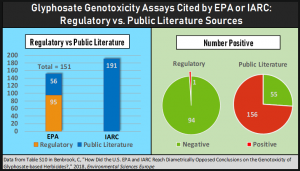
3. In a parallel universe in the U.S. how did IARC find glyphosate to be a probable carcinogen while the EPA did not? One professor's analysis boils down to the data each body considered. With the EPA, Monsanto presented only data from private industry studies; IARC's team of experts looked only at studies that meet peer reviewed scientific journal standards.

4. A French court found that French environmental protections failed to be enforced in the matter of the most widely used weedkiller and banned its use in France effective immediately.

5. France 2 will air controversial documentary on the pros and cons of glyphosate, sparking national debate.

REUTERS: NEW EVIDENCE QUESTIONS REUTERS REPORTER KATE KELLAND'S SOURCES

Lawyers combing through Bayer and Monsanto documents for pending litigation have found new clues that Reuters' top reporter on glyphosate may have been less than honest about her sources when she wrote about Monsanto's herbicides.
Image result for kate kelland reuters
Kate Kelland, Reuters

The current court cases pending against Bayer by plaintiffs (who claim that Monsanto's glyphosate based herbicides caused them to get cancer) have turned up evidence that revises the narrative a Reuters News reporter, Kate Kelland, published earlier, suggesting that the journalist may have promoted a biased view supporting Monsanto's talking points.

Reviewing new material in the matter, plaintiff's attorneys say that court documents do not support an earlier claim by Reuters reporter Kate Kelland that evidence in her reporting was based on court documents. Rather, the lawyers say, Kelland relied upon internal documents promoting Monsanto's point of view - documents that are not in the public record.

For more on this story, see U.S. Right To Know's coverage here.

EU SOURCES SAY REGULATORS COPIED AND PASTED MONSANTO DOCUMENTS INTO GERMAN REGULATORY REPORTS

Did European regulators perform their analysis of glyphosate based formulations in a pro-active manner? Or did they regurgitate Monsanto's point of view?

See the story in The Guardian for more coverage.

PROFESSOR CHARLES BENBROOK SAYS MONSANTO STACKED THE DECK, CONVINCING EPA REGULATORS TO SKEW THE DATA IN HERBICIDE MAKER'S FAVOR

Have you wondered why IARC and the EPA could come to such different conclusions about the health risks of glyphosate? A new analysis of the data sources presented says the devil's in the data presented - and omitted.

Fellow scientists point out that IARC is an independent body of scientists with no regulatory power while both EFSA and the EPA are regulators, subject to political pressure.


According to the Guardian, U.S. pesticide expert Charles Benbrook found that:
"EPA regulators used unpublished industry reports in 63% of the studies they evaluated, whereas the IARC relied solely on publicly available literature. 
"Almost three-quarters of the peer-reviewed papers looked at by IARC found evidence of genotoxicity in glyphosate, compared with just 1% of the industry analyses, according to the study published in Environmental Sciences Europe."

See Benbrook's full analysis here.

FRENCH COURT'S DEFINITIVE RULING SAYS GLYPHOSATE MUST GO

Claiming that French environmental officials failed to enforce health and safety protections against glyphosate adequately, a French court in Lyon banned the agricultural chemical.

For more on this story, read France 2's coverage here.

NEW FRENCH DOCUMENTARY ON THE GREAT GLYPHOSATE DEBATE AIRS TOMORROW

France 2 will be airing a major television report on glyphosate Thursday, Jan. 17. For more on that story, click here.

French Court Bans Glyphosate Use in France

Image result for Court of Lyon france

PARIS (Reuters) - A French court canceled the license for one of Monsanto’s glyphosate-based weedkillers on Tuesday over safety concerns, placing an immediate ban on Roundup Pro 360 in the latest legal blow to the Bayer-owned business.

A court in Lyon in southeast France ruled that the approval granted by French environment agency ANSES in 2017 for Roundup Pro 360 had failed to take into account potential health risks.

“This is a great first, which must be repeated,” Corinne Lepage, a former French environment minister and member of environment association CRIIGEN that brought the court case, said of the ruling on Twitter.

Read the full story on the Reuters web site.

Wednesday, January 2, 2019

My New (FREE) Industry News Blog Launches! Check Out Organic Wine News Briefs

Organic Wine News Briefs has now officially launched. This is my new blog for industry news.

It's the first wave of a broader initiative I'm launching called Organic Wine Insider, a newsletter for the wine industry that covers news about the organic sector of the wine industry.

This paid subscription newsletter - with fresh, original news content - will launch later this month, but the FREE news (culled from the internet) is available for subscription now.

Check both of them out here!

Monday, December 31, 2018

What Readers Wanted to Know About: 2018's Most Popular Posts

This blog took a giant leap forward in 2018!

Overall traffic increased a lot though the data is a bit imprecise. (Blogger's analytics doesn't let you specify a date range to measure, unlike the more powerful Google Analytics). But it's clear 2018 was the most popular year by far.

Thank you, readers!


That Mancozeb Story

The peak traffic in August was a record breaking 17,000 plus page views for that month alone (although I have never written anything for the sake of increasing page views).

The August spike was for several posts I wrote here questioning the lack of enforcement in Sonoma's and others' sustainability programs that got picked up by Wine Industry Insight and WineBusiness.com headlines' pages.

A prominent certified sustainable vineyard owner was using Mancozeb, a dangerous chemical not permitted under Fish Friendly Farming certification, the sustainability program he was certified under. (Therefore he was not in compliance with the requirements for Sonoma's Certified Sonoma Sustainable program).

That sparked a controversy, a response from the Sonoma Certified Sustainable program spokesperson and changes in the vineyard company's behavior. And the story was the inspiration for the Hosemaster of Wine, who wrote a blog post on being sorta sustainable that reached an international audience.

The grower has now stopped using Mancozeb, so I have removed the post about this for now.

My hope is that other growers will think twice before using chemicals that are among the more toxic options.

Unfortunately, the grower's grapes from the Mancozeb period (and his family winery) continue to be sold as Sonoma County Sustainable; no censure has taken place.

This affects not only the vineyard owning family's wines, but all the wineries that buy those grapes.

Since the family has about 1,000 acres of grape vines and more than 50 wineries purchase grapes from them, the misrepresentation affects hundreds of wines that may display the Sonoma County Sustainable labels.

HOT TOPICS 

• Pesticides 
Roundup wins in court, glyphosate test results for wine published, pesticides' tastes detectable in French wine study
This blog is the only place I know of that provides coverage of pesticides and wine, so perhaps it's not surprising that this topic alone was the biggest share of page views. 

It was also a very big year for stories about glyphosate in particular, and I was privileged to get a front row seat on some of the scientific proceedings related to these cases (which I wrote about in an article published on Civil Eats). 

A big thank you to the world class scientists who testified for their research and for their voices.

• Wine Culture
The movie Somm, the new book The Sommelier's Atlas of Taste
Does organics need to get a bigger voice in projects like this? Yes. 

What should happen next? 

In my dreams, Somm 4 would replicate the French tasting research on the taste of pesticides in wine. Wouldn't that be fun? 

And 60 Minutes would do an exposé on the use of pesticides in vineyards, just like their French equivalent - Cash Investigations - has. 

• Biodynamics
Should Jancis Robinson bone up on BD? Where to learn more (conference schedule)
Demystifying the basics of required farming practices and the economics of Biodynamic wine grape growing should be high on everyone's to do list. It's not voodoo; it's your great grandparents' farming.

• Green Wine  
Consumer insights from a pro, and the top organic growers in Sonoma
Younger consumers want greener wines, preferring organic and regenerative practices to "sustainable."

TOP TEN POSTS BY THE NUMBERS

Here were the hottest posts and topics of the year (with page view counts in bold).

PESTICIDES
1. A New Type of Wine Score - Glyphosate Levels | 3,439

Could consumers care about glyphosate in wine? Yes they could. The most popular blog post of the year was on this subject.

Moms Across America's second round of wine testing (in 2018; the first was in 2016) found 150X differences between conventionally grown wine and an organically grown brand and soon all of their FB audience (and its extended reach) knew.

(Postscript: When I wrote the blog post about the Moms' testing findings, the Wine Institute had bought an ad for the search results people might use to find out about the ad which I mentioned in the blog post. After that post was published, the Wine Institute removed its ad buy for the terms "Moms Across America glyphosate.").

Now the Moms group is actively promoting the first wine certified "Glyphosate Free" (although the cap is only 10 ppb, not 0, which could allow many organically grown wines to qualify if this labeling becomes popular with consumers).

PESTICIDES
2.  Monsanto Roundup Trial - Closing Arguments - Slides + Photos | 2,830

Trial documents from the case of DeWayne Lee Johnson versus Monsanto showed vividly how exposure to glyphosate led to a fatal diagnosis of non Hodgkin lymphoma. By year's end, stock in Monsanto's new parent company, Bayer, was worth half as much as it was a year ago.

Public opinion about the herbicide's safety also shifted following the jury's decision to impose fines of $289 million in damages against Monsanto. Though the fines were reduced, the stock price has not bounced back, amounting to a loss of billions.

More than 8,000 additional cases are pending in U.S. courts.

PESTICIDES
3. French Wine Study Finds Wine Lovers Can Taste Pesticides in Wine | 1,498

Is something missing in WSET and MW exams? French pesticide researcher Gilles-Eric Seralini and chef Jerome Douzelet found that top tasters could write tasting notes describing the flavors of various commonly used wine grape pesticides, a topic not frequently studied but with potentially serious implications.

GREEN WINE
4. An Organic Business Model: Napa's Shining Star - Ted, Laddie and Chris Hall's Growing Organic Enterprise | 1,107 

When the Halls bought the iconic Napa white wine (and celebrated Chardonnay maker) producer Stony Hill, it was the latest step in their path to building a multigenerational, organic-as-a-family-value winery and vertically integrated company.

WINE CULTURE
5. Somm 3: Yes You Must See This Movie | 835

Published less than a month ago, this story generated 800+ views. Somm 3 is fun - and elitist. And you should see it.

BIODYNAMICS
6. Jancis Robinson Sings Biodynamic Wine's Praises - But Is More Education Needed? | 835

After seeing yet another bonafide wine writer at the top of her game write a piece about Biodynamic wine and painting it with a little bit of the Harry Potter/Hogwarts brush, I decided enough was enough. It's time for all wine professionals to be better grounded in their education about Biodynamic's agronomic basis and why it matters - especially in the time of climate change. Time to put away the old tropes.

BIODYNAMICS
7. Biodynamic Association's 2018 Conference in Portland Will Feature Biodynamic Vintners and Wines | 621

Here was one place to learn more (in October) and get the information people need to write intelligently about Biodynamic wineries.

Of course, the best place was in May at the International Biodynamic Wine Conference in SF. See that web site for a list of speakers, topics and the Grand Tasting program guide with a list of wines and wineries. It's a great online resource.

WINE CULTURE
8. Raj Parr and Jordan Mackay's New Wine Book: The Classic European Wines You - and Millenials Raised on Natural Wines - Need to Know | 598

When the meme / pendulum swings too far toward the sulfite debate (i.e. natural wines), a top somm and food writer champion the great estates of Europe and traditional fine wines, which come from terroir driven vignerons.

GREEN WINE
9. Green Wine Insights: An Interview with Eco Wine Survey Author and Sonoma State Wine Business Professor Liz Thach, MW | 573 

A wine business professor's students poll finds preferences for organic and Biodynamic wines rate higher than for sustainable wines. And respondents say they're willing to pay more for these wines.

GREEN WINE
10. Top 10 Organic Vineyards by Size - Sonoma | 500

Few people know who's who in organic wine grape growing in Sonoma (or Napa) so I compiled this basic list. (I published a Napa list in 2017.)

Wishing you a happy and healthy wine loving year in 2019!

Wednesday, December 19, 2018

Bonterra and Biodynamics Star in New Amazon Prime Wine Series


Biodynamics gets a starring role in the new wine series launching Jan. 4 on Amazon Prime.

Episode 3 of the new series It Starts with Wine showcases the Biodynamic wine program at Bonterra in Hopland. It couples the story of Joseph Brinkley, vineyard manager at Bonterra, with a local burger shop chef, adding in the natural beauty of northern California in Mendocino and Sonoma. Food, wine and travel - all together.

See the trailer here.

While the series is aimed at a general audience, it's no old-white-men-on-wine series like most wine shows. This one's for you, Millenials! 

As Wine Enthusiast knows (and they created the series), the wine industry needs to convine Millenials to buy wine. The wine industry needs to hang on to as much market share as it can, in the face of more competition from wine and spirits drinkers in the Millenial generation.

Wine Enthusiast created the three episode series - which includes Uruguay, Argentina and California (organic) - as an episodic program; more episodes to come. 

The series couples wine people (vineyard guys, winemakers, owners) with low key home chefs (and semi-pros) enjoying wine with meals, surfing, riding horses, having cookouts, playing guitars and cooking with family and friends - lifestyle marketing at its finest. Characters, more than wine, figure prominently.

In the California Organic episode, expert comments from U.C. Farm Advisor (and organic and Biodynamic expert) Glenn McGourty, Wine Enthusiast editor Jim Gordon and Fetzer winemaker Bob Blue (founding winemaker of Bonterra) add enjoyable heft to the California show.

Little of the program focuses on the taste of wine, but focuses rather on selling wine as part of a groovy family lifestyle.


Pros: 

• The down home film stands in contrast to the rarified, complicated world of wine in the Somm films - selling wine as part of everyday enjoyment in life
• It features real wine experts including Glenn McGourty Jim Gordon, and Bob Blue
• It showcases the natural beauty of Sonoma and Mendocino (welcome to see after the fires have dented wine tourism in the North Coast)
• Nice drone shots!
• Reminds one of the way Bonterra originally sold organically grown wine - with organic food - at its early days Food and Wine center in Hopland (long gone), where the greats like Julia Child came to cook

Cons: 

• It focuses on a lot of lifestyle shots as opposed to flavors of wine or really any information about wine
• Bonterra's Biodynamic wine program is the film's focus (290 acres of vineyards and 2,000 cases of Demeter certified Made with Biodynamic Grapes wine), but the wine brand's main production is 498,000 cases of Bonterra wines that are actually organically grown and are Biodynamic. There's really no explanation of organics.
• The film doesn't show the animal integration or other holistic elements that are at the heart of the Biodynamic concept.

All in all, it's a pleasure to see an Amazon Prime series bring the word "Biodynamic" and "organic" in wine in a positive light.

The Press Release


Wine Enthusiast Media is pleased to announce the launch of It Starts With Wine, an original series premiering on Amazon Prime Video January 4th, 2019.

The episodic series travels the globe and follows the world's best winemakers, growers, producers and personalities, along with prominent chefs and celebrities, to offer viewers an inside look at the people, locations, cuisines and cultures that surround the wine lifestyle and the world's finest wines and spirits.

The first episode in the groundbreaking cinematic series features famed chef and restaurateur Francis Mallmann, with acclaimed "flying winemaker" Alberto Antonini, set against the beautiful backdrop of Uruguay and one of the country's premier wineries, Bodega Garzon.

"We felt that the best way to convey these stories was in episodic fashion," says Jay Spaleta, Executive Producer and Wine Enthusiast SVP. "Wine Enthusiast has long been an innovator in wine information, reviews and content, this is the next bold step in that content leadership."
"It Starts With Wine is a docuseries that tells a personal story and shares deep insights in a way that is very approachable, engaging and revealing," continues Spaleta.

Wine Enthusiast Media will be simultaneously releasing episodes I, II and III for viewers binge-watching pleasure. The series will be available on Amazon Prime Video in North America and Vimeo's On Demand premium video service globally.

Episode II of It Starts With Wine follows doctor / vintner Laura Catena and musician / chef Deborah De Corral on a visit to Bodega Catena Zapata, the renowned Argentine Winery. Founded in 1902, Catena is known for bringing traditional European winemaking methods to South America.

Episode III travels to California to look at biodynamic viticulture with Joseph Brinkley, vineyard director at Bonterra Organic Vineyards and explores the simplicity of elemental food with chef Garrett Sathre.

About Wine Enthusiast:

Wine Enthusiast Media creates innovative long and short-format content in the wine, spirits, travel and lifestyle categories. Wine Enthusiast Media is the production division of Wine Enthusiast Companies founded in 1979, and publisher of Wine Enthusiast magazine.

For more info visit: https://itstartswithwine.com

For media inquiries, image, footage and interview requests:
John Van Dekker
914-610-6074
jvandekker@enormouscreative.com

SOURCE Wine Enthusiast Media


Bottom Line: The Biggest Little Farm, a film that had audiences at Mill Valley Film Festival weeping over the beauty of the whole farm approach, is the real deal film about Biodynamics, even though it doesn't show the preps, etc. The documentary has spring 2019 release date and even though it's not about wine, it's the best introduction to the whole farm approach one could get.


Perhaps someone will have the brilliant idea of showcasing the two films together - Double feature, anyone?

Friday, December 14, 2018

EcoFarm Conference Set for January 23-26 - "Resilience is Fertile"


More than 70 workshops are scheduled for the annual EcoFarm conference for current and aspiring organic farmers, which includes viticulture and soil topics.

Sessions that include speakers from the wine industry or related fields include:

• Innovations in Biological Control

Pam Marrone at Organic Grower Summit 
Biopesticide entrepreneur Pam Marrone of Marrone Bio Innovations, Inc. and Michael Gilbert from Semios will provide an overview of emerging solutions in biopesticide and biostimulant inputs. Marrone introduced Regalia, a widely used biofungicide used against powdery mildew.

• Cover Cropping for Beneficial Insects


Houston Wilson
U.C. postdoc researcher Houston Wilson worked on the groundbreaking project to improve biological control of the Virginia Creeper leafhopper, which affected organic vineyards in the North Coast. (Mendocino and Lake County's U.C. Farm Advisor Glenn McGourty was also a leader in this project.)

Wilson and Jessa Kay Cruz will be speaking about cover crops and beneficials.

• Grazing Sheep in Perennial Crop Systems (including vineyards)


Image result for nathan stuart tablas creek
Nathan Stuart
Kelly Mullville of Paicines Ranch and Nathan Stuart of Tablas Creek Vineyards in Paso Robles will be will be featured in this session on how to succeed in integrating sheep year-round on winery properties.

• Wise Words from Well-Seasoned Farmers

Image result for lou preston

Winery owner Lou Preston of Preston Farm & Winery in Healdsburg (Sonoma County) will lead a session with Mimi Luebbermann, sheep farmer. Preston has an integrated and biodiverse farm and winery, growing wine grapes (and making wine), sheep, pigs, chickens, and more than 200 crops.

See the full schedule here.

Monday, December 10, 2018

Organic AND Sustainable: Zero Waste Pioneer Fetzer (and Bonterra) Win California's Highest Green Award


The California EPA and the California Governor Jerry Brown have awarded Fetzer Vineyards with the state's highest environmental honor, a Governor's Environmental and Economic Leadership Award ("GEELA"), presented at a Sacramento awards ceremony December 5th.

Fetzer is the parent company of the country's most popular organically grown wine brand, Bonterra.

According to the California EPA:
 "In 2017, Fetzer Vineyards diverted more than 3,000 tons of waste from landfill or incineration to achieve a 98.34 percent diversion rate through recycling, reusing and composting used materials. 
This was accomplished through waste programs that streamlined the collection of recyclable items during production.
Fetzer Vineyards also composts all pomace left over from the winemaking process and later reintroduces these materials into their vineyards as nutrient-rich compost. 
Fetzer Vineyards is recognized for their ability to reduce material consumption, mitigate negative impacts of solid waste, and create economic benefits for their business and the broader economy."
According to Fetzer's press release, "Fetzer Vineyards began tracking and reporting waste in 1990 and became the world's first winery to achieve TRUE Zero Waste certification in 2014, with a diversion rate of over 98%. "

This is the third time Fetzer Vineyards has won a GEELA awards. (The other years were 2003 and 2008.)

"We are very pleased to receive this recognition," said Cindy DeVries, chief operating officer for Fetzer Vineyards, "as it underscores the importance of a focus on waste reduction as critical to our efforts to pursue climate-smart practices in our business."

Bio Filtro BIDA system at Fetzer in Hopland, California

One component of Fetzer's recycling is its Bio Filtro BIDA water recycling system which uses worm composting to clean water to meet EPA standards. Fetzer was the first U.S. winery to adopt this technology installing it in 2016 The system processes 15 million gallons of water. The process also produces a byproduct: 573 cubic meters (20,000+ cubic feet) of worm castings, a valuable vineyard nutrient.

So far, one other organic vintner, Frey Vineyards in Redwood Valley, has also ordered a BioFiltro system. The largest ag sector in California using BioFiltro is the dairy industry.


Said CalEPA Secretary Matthew Rodriquez. "From fighting climate change to reducing waste, [Fetzer's] successful efforts are proving that environmentally sustainable practices can grow and support a healthy economy."

The effects of climate change are hitting many wineries around the world, including in Mendocino which is home to Bonterra and Fetzer's winery in Hopland. The area is close to the epicenter of the Redwood Complex Fire, which began in Potter and Redwood Valleys northeast of Ukiah and decimated the nearby Frey Vineyard. It also killed 9 local residents. 

The annual Governor's Environmental and Economic Leadership Award is administered on behalf of the Governor's Office by the California Environmental Protection Agency, in partnership the California Natural Resources Agency, the California Department of Food and Agriculture, the California State Transportation Agency, the California Business, Consumer Services, and Housing Agency, the California Government Operations Agency, the California Labor and Workforce Development Agency, and the California Health and Human Services Agency.

Fetzer is also the first winery in the world to be TRUE certified, according to Stephanie Barger, director of market transformation and development, for TRUE at the U.S. Green Building Council. "They have demonstrated leadership in minimizing waste output and efficiently using resources, furthering our goal of developing a zero waste economy for all," she said.

Bonterra is the largest wine brand in the organic sector, making more than 500,000 cases of organically grown wine each year. (Fetzer makes 4 million). Bonterra's wines account for 25% of organically grown wine sales in the U.S. 

Tuesday, December 4, 2018

Amarone: The Many Splendors of Valpolicella's "Cult Wine"

Back in 1985 when Italian wine expert Nicolas Belfrage wrote his classic book Life Beyond Lambrusco: Understanding Italian Fine Wine, Valpolicella was not an esteemed wine region.

A historic region dating back centuries, the region's name means "valley (Val) of many (poly) cellars (cello)."

"Of all the wine names historically associated with quality in Italy," he wrote, " [Valpolicella] has in our time become probably the most debased." This was despite its ideal soils - limestone, basalt, and alluvial - and southerly exposures in valleys of alpine foothills. "Theoretically," Belfrage continued, "the wines of this favoured region ought to be excellent."

Belfrage was writing at the time when mass produced cheap reds from Valpolicella dominated the market after World War II - a far cry from today, where authentic and artisanal producers produce glorious wines tasted at a "Secrets of Amarone" seminar (sponsored by the region's wine association).


The educational event was led by wine expert Deborah Parker Wong, a writer and teacher who leads many educational tastings for the trade, including another Valpolicella seminar in October.

"Amarone is Valpolicella's 'cult wine'," she said - the region's most prestigious wine which is 25% of the area's production. Just as northwestern Italy has Nebbiolo and Barolo, Valpolicella's pride and glory is its Amarone. And the U.S. is, by far, Parker Wong said, the leading market for Amarone.

Amarone has traditionally been known as a "wine of meditation" - a great big red that, according to Belfrage, is one of the world's strongest unfortified wines. These were also the great "conversation wines"; "wines of breed and high civilization, whose decline from favour is an indicator of the decline of social graces," he wrote back in 1999.

In the age of cell phones at the dinner table, what's become of this grand old tradition?

Robert Parker. In the age of big, bold wines with food, Amarone has become a "food friendly" wine to pair with dinner. In fact, a pairing menu of delicious dishes was presented (from a GuildSomm member) suggesting a number of options including steak and figs, or venison with plums (a traditional pairing). Times change. The vintners of Valpolicella are not complaining.


It makes sense then that the trend among producers today is towards lower alcohol (still at 15.5-16%) fresher, lighter styles.

Amarone still tends to be an affordable "great wine," with prices of the 16 wines tasted mostly clustered around $35-50. The Biodynamic wineries were the exception with wines priced at $69 and $107 (for older vintages).

The tasting yesterday featured wines from a variety of vintages dating back to 2009. Andrea Lonardi, winemaker at Bertani, provided a longer term view of Amarone aging with this chart Parker Wong included in the presentation:


In the tasting - which featured 16 wines - the full range of Amarone was on display, from coop produced wines including grapes from outside the Classico region to Amarone's that reflected herbaceous, garrigue like influences.

ORGANIC PRODUCERS

Novaia Corte Verona - Amarone della Valpolicella Classico DOCG 2013, $35

This wine comes from a site at a high elevation in the Marano with some clay soils as well as basalt and tuffa. "The clay is important as it activates the soils," Parker Wong said, whose tasting note for this wine was "chocolate covered cherries."

I've also tasted this wine at the Slow Wine tasting (which usually takes place January) along with Novaia's other wines.


ORGANIC AND BIODYNAMIC PRODUCERS

Corte Sant'Alda - Amarone della Valpolicella DOCG 2012, $107


Marinella Camerani (right) with her team
Beloved by the writers of Slow Wine Italy and many other Italian wine experts, I was surprised to read today that Corte Sant'Alda began as the hobby of its proprietor, Marinella Camerani, who took over her family's farm in 1985 and had just four vines. After meeting Nichoas Joly in 2002, the light went on and she converted to Biodynamic practices. The estate is named for her daughter, Alda.

Today she is one of the region's top tier producers and her price on this wine reflects it.

2012 was a drought year and for the first time the regional association permitted "rescue irrigation." (Irrigation is usually not permitted.) Yields were down, but quality was not. However, this wine, although from outside the Classico region, on alluvial soils in the Mezzane, was one of the standouts in the tasting. "Spicy, youthful, delicious...light and also complex," were some of the notes I took. Others got "salty caramel, cardamom, bay leaf."

An esteemed taster who sat next to me (and whose name will not be mentioned out of respect for privacy) had been mostly quiet while we tasted the wines, but this wine totally lit him up. "I'll take a case of that!" he said.

Valentina Cubi - Morar - Amarone della Valpolicella Classico DOCG 2009, $69


Valentina Cubi is another leading lady among the Valpolicella vintners. Organic certified since 2010, her wines are highly regarded; sampling a 2009 was a real treat. 

I have to say the pictures of accommodations at her estate that I found online later are dreamy and will have you fantasizing about your next trip to the Veneto.


Valentina Cubi has also exhibited at Raw Wine.

Wednesday, November 28, 2018

Six Organically Grown Wines from Sonoma Make Sonoma's 2018 Top 100 Wine List

Six great organically grown wines popped up on the Sonoma magazine's top 100 wines list for 2018 unveiled this week. Written by veteran wine writer Linda Murphy, the list of 100 top wines includes outstanding wines from a wide variety of wineries and regions, yet an above average concentration of organically grown wines, a pattern that is often repeated.

Organic grape growers represent just a little over 2 percent of the vineyards in Sonoma, but 6 percent of the wines are from organic vineyards. That's three times their weight.

Here are the organically grown winners including many wineries written about here over the years). Notably the 2018 list omitted many of the consistently great wineries - Ridge, Porter Creek, and others dedicated to organic and Biodynamic farming practices. (Are the curators are trying to get more newcomers on board?)

Here are some wines to put on your radar:

WHITES

Alexander Valley AVA

Medlock Ames 2017 Bell Mountain Sauvignon Blanc ($29)
"Vibrant" and "racy"read the tasting notes for this white wine from an all estate and all organic winery with not one but two vineyards.

ROSE

Dry Creek Valley AVA

Quivira Vineyards 2017 Rosé ($22)
A "crisp and spicy" blend of Grenache, Mourvedre, Counoise, Syrah - and to add an authentic Dry Creek touch, Petite Sirah - this rosé is one of my personal go to favorites.

CABERNET SAUVIGNON

These selections come from a variety of appellations demonstrating the diversity of Sonoma's prime Cab spots - as well as their not-Napa prices.

Alexander Valley AVA

Alexander Valley Vineyards 2015 Estate Cabernet Sauvignon (get the one labeled "made with organic grapes") ($32)
The Wetzel family has a large conventional vineyard and then a small organic vineyard that's a side project. Wrote Murphy, "judicious use of oak lets the concentrated fruit shine." This wine represents a great value for an Alexander Valley cab.

Moon Mountain AVA

Amapola Creek's 2014 Sonoma Valley Cabernet Sauvignon ($90)
This classic comes from Richard Arrowood, the legend who put Sonoma Cabs on the map. His Moon Mountain AVA vineyard is situated on red volcanic soils, a prime spot for Cabernet. Murphy: "Polished and elegant."

Sonoma Mountain AVA

Laurel Glen Vineyard 2014 Cabernet ($75)
This is another personal favorite of mine delivering, as Murphy wrote, "...freshness and elegance." I agree.

Dry Creek Valley AVA

Hawley Vineyards, Cabernet Sauvignon ($52)
If you haven't visited the Hawley Family's vineyards near Bradford Mountain, you should. That's where this Cab is grown. "Dark fruit: blackberry, dark plum, and blueberry..." are the notes on this vintage. If you do go, you may catch a glimpse of the winemaker as falconer.

Tuesday, November 20, 2018

Super Wow - French TV Ad for Hair Testing for Pesticides

Best ad of the year...!

Although it's in French, you can probably make out what the text says which is basically: You think pesticides are here. And here. And here. But in fact they are everywhere. The same goes for your hair. What? We tested people's hair to show where longer term pesticide exposure is. Pesticides have nothing to do with your body. Share this with others who demand getting rid of pesticides.


The first wave of hair testing for a panel of pesticides was recently conducted by the EU Green Party and released in early November.

Though the number of people sampled was small, you can see what the first wave of testing found here in this report. (A new hair test for glyphosate has just been introduced but it wasn't part of this first group of tests since it was not yet on the market). The detailed report is here.

More than 60% of samples from 148 people contained at least one pesticide residue

Basically the four most commonly found pesticides include chlorpyrifos-ethyl (insecticide, 10.1%), fipronil (insecticide, 29.7%), permethrin (insecticide, 18.9%) and propiconazole (fungicide, 18.9%).

Chlorpyrifos is banned in agriculture in the EU (though not in the U.S.). Chlorpyrifos is not commonly used on wine grapes, though it is a staple on conventional produce farms. A dangerous neurotoxin, it was scheduled to be banned by the EPA until Trump became president and those plans were overturned.

Last year Sonoma-Cutrer used it on 100 acres in Sonoma.

Both chlorpyrifos and fipronil are used in pet flea collars and experts surmise these products may be exposing humans as well as pets.

Friday, November 16, 2018

Organic Beverage Session Added to Organic Grower Summit

Katrina Frey
WINE ON THE TABLE

Wine has a place on the agenda at the Organic Grower Summit (taking place Dec. 12-13) with Katrina Frey, of Frey Vineyards in Mendocino, and Phil LaRocca, CCOF Board Chair and head of LaRocca Vineyards in the Chico area, appearing on the new panel on organic beverages.

Bill Vyenielo, senior wine business consultant for Moss Adams LLP, will be the moderator.

According to the conference organizers, the Organic Trade Association says organic wine sales doubled from 2007 to 2016, when organic wines brought in $282 million in revenue.

Both panelists have wineries that make wine that is certified as USDA Organic Wine - i.e. made without added sulfites, which is the certification category that is less than 10 percent of off premise sales, according to Nielsen data. (Nielsen data does not include Costco sales or natural food stores' sales.)

Both producers make significant amounts of wine.
• Frey's production is 220,000 cases, from grapes sourced from its own 250 acres of vines and those of additional growers. Its wines are widely sold in natural foods stores and at Whole Foods. Frey Vineyards is the largest producer in the no added sulfite category.
• LaRocca's production is 25,000 cases harvested from the winery's 100 acres of vineyards.

Our Daily Red, sold only at Trader Joe's, is another large producer in this market, with wines at slightly lower price points. It sells about 100,000 cases annually.

Overall, more than 80 percent of organically grown wines counted by Nielsen come from "Made with Organic Grape" wines, which is a certification type that permits a limited number of sulfites. The leading brand in that category is Bonterra, with a 25% market share organically grown wines sold in the U.S. Bonterra produces 500,000 cases a year.

ORGANIC VINTNERS AFFECTED BY WILDFIRES

Coincidentally each of the two organic vintners featured on the conference panel has faced severe challenges from the recent spate of wildfires.

Last year's Redwood Complex Fire, which covered 36,000 acres in Mendocino County, burned Frey's winery, northeast of Ukiah in Redwood Valley. Luckily a new winery was already in the works, but the fires impacted business and the family. Only two of the family's ten homes still stands, and 18 employees lost homes. (Half of the employees are family members). Beba Frey, the 93 year old matriarch of the family, escaped. Frey expects to move into its new winery in 2019.

Today Phil LaRocca is facing peril from fire as the Camp Fire encroaches on his vineyards in Forest Ranch, The 142,000 acre fire is still burning. The town of Forest Ranch was under evacuation orders for six days until the order was lifted yesterday.

CONFERENCE DETAILS

Education sessions at the conference also feature Pam Marrone of Marrone Bio, who has pioneered many organic products used in both sustainable and organic vineyards.

For more information about the two day conference in Monterey, click here.

Tuesday, November 13, 2018

New Italian Cinema's Prosecco Wine Movie Plays Dec. 1 in SF

A first feature by Treviso born director, Antonio Padovan, this charming Italian mystery The Last Prosecco covers the final days of a count who makes Prosecco on the steep hillsides of Valdobbiadene (in the Veneto region of northern Italy).

The film takes its plot from Fulvio Ervas’s novel The Last Prosecco about a reclusive bohemian aristocrat who is fiercely opposed to his neighbors' support for a chemical plant that pollutes the air his precious vines breathe. The whodunit keeps you guessing until the last minute with plenty of characters to suspect along the way.

The film plays Dec. 1, Saturday, at 6 pm at the Vogue theater in San Francisco. Find details here.

Thursday, November 8, 2018

Under the Radar Varieties Shine at Daniele Cernilli's Italian Wine Book Party Tasting

While the usual belles of the ball - Italian all star wines from Barolo, Sassicia and Tuscany - displayed their charms at the Italian wine tasting Monday at Farallon restaurant, for me, the fun was tasting the indigenous grape wines from organic vineyards (along with some top notch Chianti).

Wines from the little known Bellone, Cesanese, Lacrima and Pecorino grapes (from producers with organic vineyards) had something fresh and lively to say. Each was a pleasure to discover. And they were all priced well below $20 - a win win for consumers looking for something different - and affordable.

Daniele Cernilli and Marina Thompson (husband and wife)
at the book launch party at Farallon
The tasting was held to celebrate Italian wine expert Daniele Cernilli's The Essential Guide to Italian Wine 2019, now in its 5th edition. A judge for Decanter's World Wine Awards and Vinitaly, Cernilli was one of the founders of the acclaimed wine guide Gambero Rosso in 1986 (before starting his Essential Guide series in 2015) and is a widely respected and influential expert. Today, his website Doctor Wine is a popular destination.

The 2019 edition of the book covers 1,134 selected producers and 2,809 wines (including 652 wines priced under 15 euros [or $17 U.S.]). In 2018, 10,000 copies of the book were sold.

Organic or Biodynamic certifications are noted in the guide.

Monday's tasting included 24 producers, four of whom were certified (or officially in transition) to organic certification. These include: Casale del Giglio in Lazio (near Rome), Felsina (in transition to organic) and Querciabella in Tuscany, and Velenosi (some organic vineyards) in the Marche.

INDIGENOUS GRAPES

1. CASALE DEL GIGLIO - LASIO - CESANESE

This winery 30 miles south of Rome has been a pioneering leader in raising the profile of wines from the Lazio region. It began with a large scale planting of international varieties back in 1985, after government funded research found that the region's red clay and alluvial soils could grow worthy wine grapes. More than 60 varieties were planted.

Mater Matuta temple remains from the 9th-5th
century BCE were found adjacent to Casale
del Giglio's vineyards south of Rome
The name Casale del Giglio means "House of Lilies." Uniquely, a ancient road, parallel to the Appian Way, and a temple to the goddess Mater Matuta, dating back to the 9th-5th centuries BCE, have been found on the property. A 5th century BCE ceramic wine goblet was found on the site, along with other Etruscan objects now housed at the Villa Giulia in Rome.

Today the winery produces mainly novel international blends but has recently branched into indigenous grapes, including Cesanese.


Casale del GIglio's Cesanese is made with native yeast (700 cases, $15)

Winemaker Paolo Tiefenthaler and Proprietor Antonio Santarelli  
2. VELENOSI - MARCHE - PECORINO and LACRIMA

With 345 acres of planted vines, Velenosi is the second largest family owned winery in the Marche, a province on Italy's eastern side, bordering the Adriatic coast. Founded and run by Ercole and Angela Velenosi in 1984, it has become a Marche success story, achieving recognition for its indigenous grape wines, including Pecorino and Lacrima. (The latter is not yet organic).

These vibrant and unique wines sell for just $15 and can be found in the U.S. on wine-searcher.com.

Velenosi's Offida Pecorino DOCG - a treat!
TRADITIONAL ITALIAN GRAPES

1. QUERCIABELLA - TUSCANY - CHIANTI CLASSICO (SANGIOVESE)

The 2015 Chianti Classico ($33) won a 97 point rating
and a platinum medal from Decanter's World Wine Awards
Querciabella, which means beautiful oak, is renowned for its Chianti Classico, grown using Biodynamic practices. 

Like another great Biodynamic producerin Tuscany, Avignonesi, it is certified organic, not Biodynamic, due to the fact that Demeter Italy's standards are particularly stringent, exceeding those Demeter standards in other European countries and the U.S. 

All of the wines here are well worth seeking out, offering outstanding values and pleasures, and the book is an excellent way to seek out affordable wines that you can't always find on the shelf. The book is exceptionally well curated. And it would also make an excellent holiday gift, coupled, of course, with a bottle of one of its highly rated wines.