Tuesday, December 16, 2025

Organic + Sparkling = A Perfect Match


Are you planning on celebrating the holidays with some sparkling wines?

Consider making yours the greener ones...

Your choices could easily include organically grown bubbly! All below are traditional method (i.e. fermented on yeast, lees).

Traditional Grapes (Pinot Noir, Chardonnay)

--Organic 

Chalone / Monterey County

• Under the Wire Brosseau Vineyard  (and Flatiron SF) ($54)

Mendocino | Anderson Valley

• Handley Cellars 2019 Blanc de Blanc ($60)

• Long Meadow Ranch 2019 Blanc de Noirs ($85) and 2020 Brut Rosé ($125)

 Neal Family Vineyards sparkling wine 2021 One & Only Blanc de Blanc ($50)

Mendocino / Potter Valley

A TOP PICK • McFadden Vineyards Brut Rosé ($35) and Brut ($35) ***** My personal fave for price and quality 

Napa

• Matthiasson's first Sparkling Wine (Linda Vista Chardonnay) ($85)

Sonoma

• Canihan Wines Brut Nature 2019 ($48)

• Gloria Ferrer Sencilla 2021 (100 cases; $85) In Spanish, Sencilla means “simple." As a zero dosage 100 percent Chardonnay sparkling wine, it showcases the power and finesse of organically farmed Chardonnay without any added sugar. (Ferrer has now converted 338 acres of their vineyards to organics! But it will be a few years before those wines become available.)

--Biodynamic

Oregon | Willamette Valley

• King Estate's 2019 Brut Cuvee ($40)

• Soter Vineyards 2021 Mineral Springs Brut Rosé ($80) and a full spectrum of sparkling wines

Oregon / Gorge

• Analemma 2018 Atavus Blanc de Noirs Sparkling ($76)

Other Sparkling Wines (Non Traditional Grapes)

California

Amista Vineyards (Dry Creek Valley, Sonoma County) 4+ wines: Chardonnay, Grenache, Mourvedre and Syrah ($50+) 

• Bokisch Vineyards (Lodi) Cava Inspired 2023 Lo Xalet Sparkling Wine ($60) (Spanish Indigenous Variety Grapes) and a 2024 Sparkling Albarino and a 2023 Sparkling Rosé 

• Neal Family Vineyards (Napa) Spokes Sparkling Wine ($40) (Vermentino)

----

BONUS SECTION | Charmat Method Wines

• Cricket Farms Brut Sparkling Wine (Lake County) 3 wine: Chardonnay, Chenin Blanc and Viognier 

• Robert Hall (Paso Robles) Cavern Select 2022 Grenache Blanc ($45)

----

ANOTHER BONUS SECTION | Imported Organic Sparklings

• Avaline Sparkling (Raventos) $35 (not available at Target; only the Prosecco is at Target which is not traditional method) Order Online

Argentina

• Domaine Bousquet 

Spain

• Any Cava Guarda Superior from 2025 onward

• Raventos Blanc

• Vins el Cep (via Wine.com)

https://www.vilarnau.es/en/els-nostres-vilarnau/vilarnau-cavas/vilarnau-brut-reserva-rose-delicat-organic

TOP PICK • Vilarnau Brut Reserva Rose $18 at Total Wine 

----

ACTUAL CHAMPAGNE PRODUCERS

I love the grower champagnes who are organic or biodynamic. 

There is an association of all the organic and biodynamic grower champagne producers – find a list of them here. Or check out their instagram https://www.instagram.com/champagnesbiologiques/?hl=en

I am currently partial to Champagne de Sousa (biodynamic) which is available in the USA - $46-67 (3 wines) at Bottle Barn and at other retailers, and of course Champagne Fleury (also biodynamic). It is not easy to be organic in wet, damp Champagne but there are skilled producers who accomplish this task. Some say it's easier when you are biodynamic. Fleury also has a cool wine bar in Paris.

To keep up with organic and biodynamic developments in Champagne, have a look at Caroline Henry's awesome substack newsletter (and book).

----

LAST YEAR'S SPARKLING ROUNDUP Blog Post 


Thursday, December 11, 2025

Scary Scientific Findings: Toxicologists' Latest Published Research Reveals Pesticides' Yucky Effects On Human Gut Microbiome

Is it the original sin? Our early evaluations of the herbicide Roundup (a formulation) and glyphosate simply did not "see" the bacteria in our gut as part of our anatomy, and that is why scientists hypothesized (wrongly and bigly) that Roundup was safe for humans, because we did not have that the shikimate pathway, which, AI tells us, 
"is a vital seven-enzyme metabolic route in plants, fungi, and bacteria, responsible for producing essential aromatic amino acids (phenylalanine, tyrosine, tryptophan) and many other crucial aromatic compounds like folates, ubiquinone, and lignins, starting from erythrose-4-phosphate and phosphoenolpyruvate. Animals lack this pathway, making it a target for herbicides like glyphosate (which inhibits an enzyme in the pathway) and potential broad-spectrum antibiotics."

While we had discovered that our innate biological physical material does not have the pathway, our gut bacteria does...hence...cancers develop, etc. (We are not so cleverly partitioned in our beings as in our minds.) 

So here we are, and building on this knowledge an A List gang of scientists at Cambridge have allied with the latest AI tool (LLM) to discover, lo and behold, that nature does not compartmentalize things are we have previously thought. 

Press release about their research (easy to read)

Journal article of the research (well written, scientific research article)

"A large-scale laboratory screening of human-made chemicals has identified 168 chemicals that are toxic to bacteria found in the healthy human gut. These chemicals stifle the growth of gut bacteria thought to be vital for health.

Most of these chemicals, likely to enter our bodies through food, water, and environmental exposure, were not previously thought to have any effect on bacteria.

Lead scientist Roux said, "We’ve found that many chemicals designed to act only on one type of target, say insects or fungi, also affect gut bacteria." 

The new research tested the effect of 1,076 chemical contaminants on 22 species of gut bacteria in the lab. 

Chemicals that have a toxic effect on gut bacteria include pesticides like herbicides and insecticides that are sprayed onto food crops, and industrial chemicals used in flame retardants and plastics. 

The human gut microbiome is composed of around 4,500 different types of bacteria, all working to keep our body running smoothly. When the microbiome is knocked out of balance there can be wide-ranging effects on our health including digestive problems, obesity, and effects on our immune system and mental health."

The study found that "out of 1,076 compounds in total, 829 were pesticides, 119 were pesticide metabolites, 48 were industrial chemicals, 5 were mycotoxins and 76 were other, pesticide-related compounds."

Another convincing reason to eat (and drink) only organically farmed food and drink.

Two Notable Napa Farm to Table Producers Make Hudin's 2025 Top 100 Wines List


Two of my favorite wines from Napa valley wineries who farm organically and have been pioneers in both quality and farming are the only California wineries to make Miguel Hudin's Top 100 wines list for 2025.

They are the Frog's Leap 2019 Williams Rossi Cab ($125), an historic site that the Williams family has nurtured back to vibrant life, and the Tres Sabores Zinfandel ($58) from vines planted in 1972. (Anyone else besides vintner Julie Johnson would have removed the Zin and planted Cab, but thankfully she has kept these beauties in the ground).

Bravo. 

If you have not visited these wineries yet you owe it to yourself to do so. That would be a perfect holiday outing if you are entertaining friends or just need a mini-adventure yourself. 

Both wines have been perennial favorites in Slow Wine USA.


Wednesday, December 10, 2025

Christmas Crafting Anyone? Cork Ornament Making at Cooper Garrod in South Bay This Weekend


A message and an invite from Cooper Garrod. Christmas crafting comes to a winery we love.

"We have been saving up our corks all year for this! 

Saturday and Sunday, we will be hosting a CORK ORNAMENT MAKING TABLE here at Cooper-Garrod.  For $5, you can step up and try your hand at making a cork reindeer, or whatever other holiday design you might like to try!  We will provide all of the supplies. What a FUN WAY to enjoy a glass of wine around the holidays!  

No advance reservation needed for making a cork ornament - but we DO recommend making a reservation for your wine tasting."

Reserve here. 

The winery also offers horseback riding and is a great historical attraction as well. The family has preserved its heritage as an apricot facility and a symbol of the South Bay's aviation history.

Ed King is Oregon’s first American Wine Legend winner


I'm happy to share this news with you, honoring both King Estate and Ed King and Organic and Biodynamic Farming and Certification

PRESS RELEASE

Ed King is Oregon’s first American Wine Legend winner

Wine Enthusiast Magazine has named Ed King the 2025 American Wine Legend. King, co-founder and co-CEO of King Estate Winery in Eugene, Ore., will receive the award in New York City on Jan. 26, 2026, at the 26th annual Wine Star Awards gala.

“I’m honored to be recognized as an American Wine Legend by Wine Enthusiast Magazine,” King said. “When we bottled our first vintage in 1992, Oregon wine was still finding its place on the world stage. But we believed in its potential. It took vision, hard work and a shared commitment from the many hands who helped build King Estate. More than 30 years later, seeing how far Oregon wine has come and knowing we played a part is deeply rewarding.”

Oregon is the fourth largest wine producing state in the country, comprising about 2% of the national wine market. Ed King is the first Oregon winemaker to win the American Wine Legend award.

 About Ed King: With a work ethic honed in his native Kansas, Ed King came west and found his future in a 600-acre plot of land used to grow hay for cattle. In 1991, the nascent Oregon wine industry was still emerging as an economic and cultural force. King Estate planted its flag in Eugene, expanded to 1,033 acres, and made a name for itself as an early champion of Pinot Gris in a Pinot Noir state, opening up national markets to the varietal and to Oregon wine more broadly. In another ahead-of-its-time achievement, King Estate was certified as organic in 2002 and Biodynamic® in 2016, living out its commitment to stewardship, one of its core founding principles.

Thursday, December 4, 2025

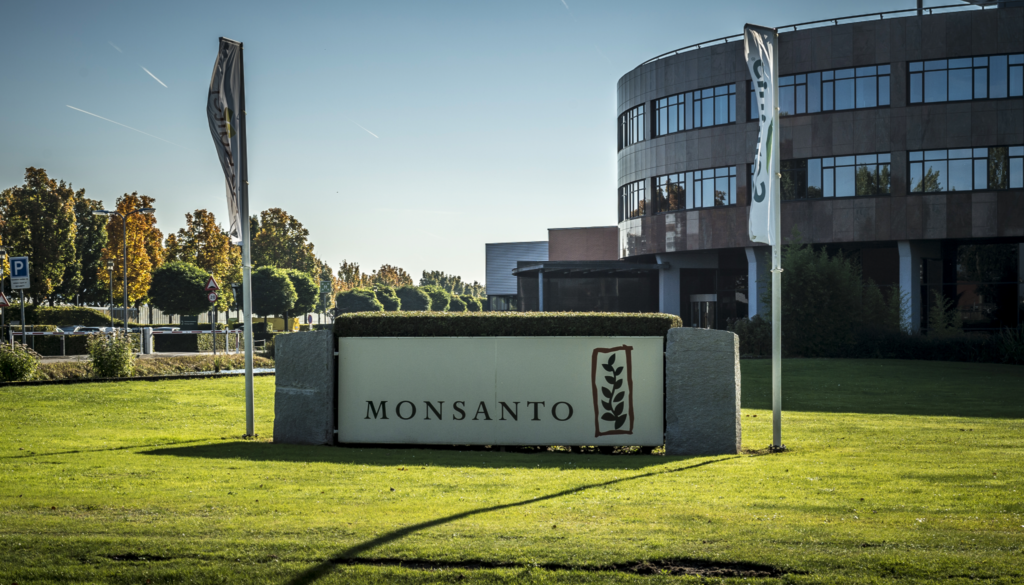
Karma for Monsanto's Fake Science Is Slow: The retraction was “a long time coming”: 25 Years

Monsanto new

Thanks to The New Lede for this story and to the hundreds of others who ran it. The story is even in Le Monde in Paris.

Citing “serious ethical concerns,” journal retracts key Monsanto Roundup safety study

The journal Regulatory Toxicology and Pharmacology has formally retracted a sweeping scientific paper published in the year 2000 that became a key defense for Monsanto’s claim that Roundup herbicide and its active ingredient glyphosate don’t cause cancer.

Journal Editor-in-Chief Prof. Martin van den Berg, Ph.D.,  said in a note accompanying the retraction that he had taken the step because of “serious ethical concerns regarding the independence and accountability of the authors of this article and the academic integrity of the carcinogenicity studies presented.”

The paper, titled “Safety Evaluation and Risk Assessment of the Herbicide Roundup and Its Active Ingredient, Glyphosate, for Humans,” concluded that Monsanto’s glyphosate-based weed killers posed no health risks to humans – no cancer risks, no reproductive risks, no adverse effects on development of endocrine systems in people or animals. Regulators around the world have cited the paper as evidence of the safety of glyphosate herbicides, including the Environmental Protection Agency (EPA) in this assessment.  

The listed authors of the paper were three scientists who did not work for Monsanto – Gary Williams, Robert Kroes and Ian Munro – and the paper was touted by the company as a defense against conflicting scientific evidence linking Roundup to cancer. The fact that it was authored by scientists from outside the company, from seemingly independent researchers, gave it added validity.

But over the last decade, internal company documents that came to light in litigation brought by cancer victims have revealed that the paper actually was a product of three years of what one company official referred to as “hard work” by several Monsanto scientists who helped craft the paper as part of a strategy Monsanto called “Freedom to Operate” (FTO).

The corporate files show that company officials celebrated their work when the paper was published. In one such email following the April 2000 publication of the Williams paper, Monsanto government affairs official Lisa Drake described the toll the work developing “independent” research papers took on multiple Monsanto’s scientists.

“The publication by independent experts of the most exhaustive and detailed scientific assessment ever written on glyphosate … was due to the perseverance, hard work and dedication of the following group of folks,” Drake wrote. She then listed seven Monsanto employees. The group was applauded for “their hard work over three years of data collection, writing, review and relationship building with the papers’ authors.”

Drake further emphasized why the Williams paper was so significant for Monsanto’s business plans: “This human health publication on Roundup herbicide and its companion publication on ecotox and environmental fate will be undoubtedly be regarded as “the” reference on Roundup and glyphosate safety,” she wrote in the email dated May 25, 2000. “Our plan is now to utilize it both in the defense of Roundup and Roundup Ready crops worldwide and in our ability to competitively differentiate ourselves from generics.”

In a separate email, a company executive asked if Roundup logo polo shirts could be given to eight people who worked on the research papers as a “token of appreciation for a job well done.”

Monsanto’s Hugh Grant, who at that time was a senior executive on his way toward being named CEO and chairman, added his own praise, writing in an email “This is very good work, well done to the team, please keep me in the loop as you build the PR info to go with it.”

In 2015, Monsanto scientist William Heydens suggested that he and colleagues “ghost-write” another scientific paper. Monsanto could pay outside scientists to “edit & sign their names” to the work that he and others would do, Heydens wrote in an email. “Recall that is how we handled Williams Kroes and Munro 2000.”

The emails were spotlighted in jury trials in which cancer victims won billions of dollars in damages from Monsanto, which was bought by Bayer AG in 2018.

In explaining the decision to retract, van den Berg wrote:

“Concerns were raised regarding the authorship of this paper, validity of the research findings in the context of misrepresentation of the contributions by the authors and the study sponsor and potential conflicts of interest of the authors.” He noted that the paper’s conclusions regarding the carcinogenicity of glyphosate were solely based on unpublished studies from Monsanto, ignoring other outside, published research.

Van den Berg did not respond to a request for comment.

When asked about the retraction, Bayer said in a statement that Monsanto’s involvement was adequately noted in the acknowledgements section of the paper in question, including a statement that referred to “key personnel at Monsanto who provided scientific support.” The company said the vast majority of thousands of published studies on glyphosate had no Monsanto involvement. 

“The consensus among regulatory bodies worldwide that have conducted their own independent assessments based on the weight of evidence is that glyphosate can be used safely as directed and is not carcinogenic,” the company said.

An EPA spokesman said that the agency is aware of the retraction but “has never relied on this specific article in developing any of its regulatory conclusions on glyphosate.” The spokesman said the EPA has “extensively studied glyphosate, reviewing more than 6,000 studies across all disciplines, including human and environmental health, in developing its regulatory conclusions.” The updated human health risk assessment the agency is currently conducting for glyphosate is “using gold standard science,” the spokesman said. That assessment should be released for public comment in 2026 and will not be relying on the retracted article.

Brent Wisner, one of the lead lawyers in the Roundup litigation and a key player in getting the internal documents revealed to the public, said the retraction was “a long time coming.”

Wisner said the Williams, Kroes and Munro study was the “quintessential example of how companies like Monsanto could fundamentally undermine the peer-review process through ghostwriting, cherry-picking unpublished studies, and biased interpretations.”

“Faced with undisputed evidence concerning how this study was manufactured and then used, for over two decades, to protect glyphosate sales, the Editor-in-Chief … did the right thing,” Wisner said. “While the damage done to the scientific discourse—and the people who were harmed by glyphosate—cannot be undone, it helps rejuvenate some confidence in the otherwise broken peer-review process that corporations have taken advantage of for decades. This garbage ghostwritten study finally got the fate it deserved. Hopefully, journals will now be more vigilant in protecting the impartiality of science on which so many people depend.”

----

MY NOTE: 2017 coverage of the New York Medical College defending Gary Williams (the only one of the three scientists who signed the paper) is unsettling and deserves a followup.

Wednesday, December 3, 2025

Don't Just Ring in the New Year with Any Old Bubbles: Ring in the New Year with Biodynamic Cava Bubbly - FREE SHIPPING, TOO

I recently traveled to Spain on a sponsored trip to attend the incredible educational 2025 Cava Meeting, a momentous event in which the Cava D.O. announced the 2025 vintage of Cava Superior wines is required to be organic. 

It is a landmark achievement, but caution is advised–these are the elite Cava wines that are rarely imported in the USA, not the mass market Cavas from Friexenet and Codorniu that you find on supermarket shelves and in big box wine stores. 

With a small group of American wine writers, I traveled to visit 12 producers after the meeting and was impressed by their wines. In terms of quality and price, these were amazing. 

On the first night dinner, I was fortunate enough to sit next to the biodynamic pioneer in the region, Vins el Cep, which I have since discovered, makes a beautiful, biodynamically farmed (Demeter certified grapes) Cava you can buy now on wine.com with FREE SHIPPING (now through Dec. 9).  

Get the free shipping with this code: ELF.

This 2019 Clos Gelida Gran Reserva (aged a minimum of 30 months in bottle) is all estate grown, estate vinified and aged and is $22.

NOTE

I have wonderful photos to share here on this wine and visit but Google's blog software is fussy about which account I am logged in on and won't let me post photos here. Instead, visited my substack to see the photos here. 

In the meantime, here's a link to the Instagram photo with Maive Esteve, general manager at Vins el Cep. LINK

Tuesday, December 2, 2025

Saying Goodbye to Roundup Herbicide: Napa's Progress

I never thought I would see the day when the SF Chronicle's wine department would take up the topic of Roundup herbicide again. 

But that day came today! 

Have a look (gift link).

And kudos to Napa Green for its work on this effort. 

Unmentioned in this article is the Napa Valley Grapegrowers own work on this topic. See the story of growers spontaneously cutting back due to public inquiries in the wake of the three Bay Area court cases awarding a school landscaper and home users millions in awards for Roundup's role in contracting Non Hodgkin Lymphoma (NHL) which attacks the lymphatic system. 

Unfortunately, Napa and other growers throughout the wine growing world continue to use this soil killing herbicide widely.

That's why you should buy organically grown food and wine.

In wine, the risks of residues in the wine on humans' microbiome is not well understood but there are many significant studies on its soil killing properties. Wine testing studies showed that organically grown wines had far fewer residues than conventional or sustainable wines.  

(Most people absorb glyphosate in the body from eating non-organic grains, non-organic grain products [bread, cookies, cereals, etc.] and non-organic potatoes.)

For the latest exciting new science looking at glyphosate (the active ingredient in the commercially available Roundup these days–Bayer stopped selling home owners the glyphosate version after the spate of lawsuits halved its stock price due to the court case payouts) and human health, see the international collaboration of leading scientists at the Global Glyphosate Study

The latest discovery in the science community? Glyphosate (both alone and in commercial formulas) causes more kinds of cancer than were previously known-and at lower doses than previously thought. The researchers have shared their findings with regulators in the hopes of impacting policies.

It should be noted that none of the lawsuits involved in vineyard workers (so far). Most were of landscapers and residential users who used the herbicide frequently.

Vineyard workers are often exposed to far more dangerous vineyard chemicals with higher toxicity, but few studies have looked at this. One study showed that Parkinson's is related to one of those chemicals (paraquat), but its use has now been curtailed in the state of California. 

According to the National Institute of Health (pre-Trump) "Parkinson's disease is the world's fastest growing brain disorder, and exposure to environmental toxicants is the principal reason." Paraquat is one. 

If you want to support human health and soil health, vote with your dollars.

------

A reminder: Slow Wine USA's guide to wine lists only wines farmed without herbicide. Get your guide here (amazon) or here (bookshop.org).

Gift idea: pair the book with a bottle of wine from one of the producers in the guide!

Hint: there are hundreds of wines, both in Napa and the rest of the US, grown without herbicides. 

And a final note: ALL the ORGANIC grower are always glyphosate free.